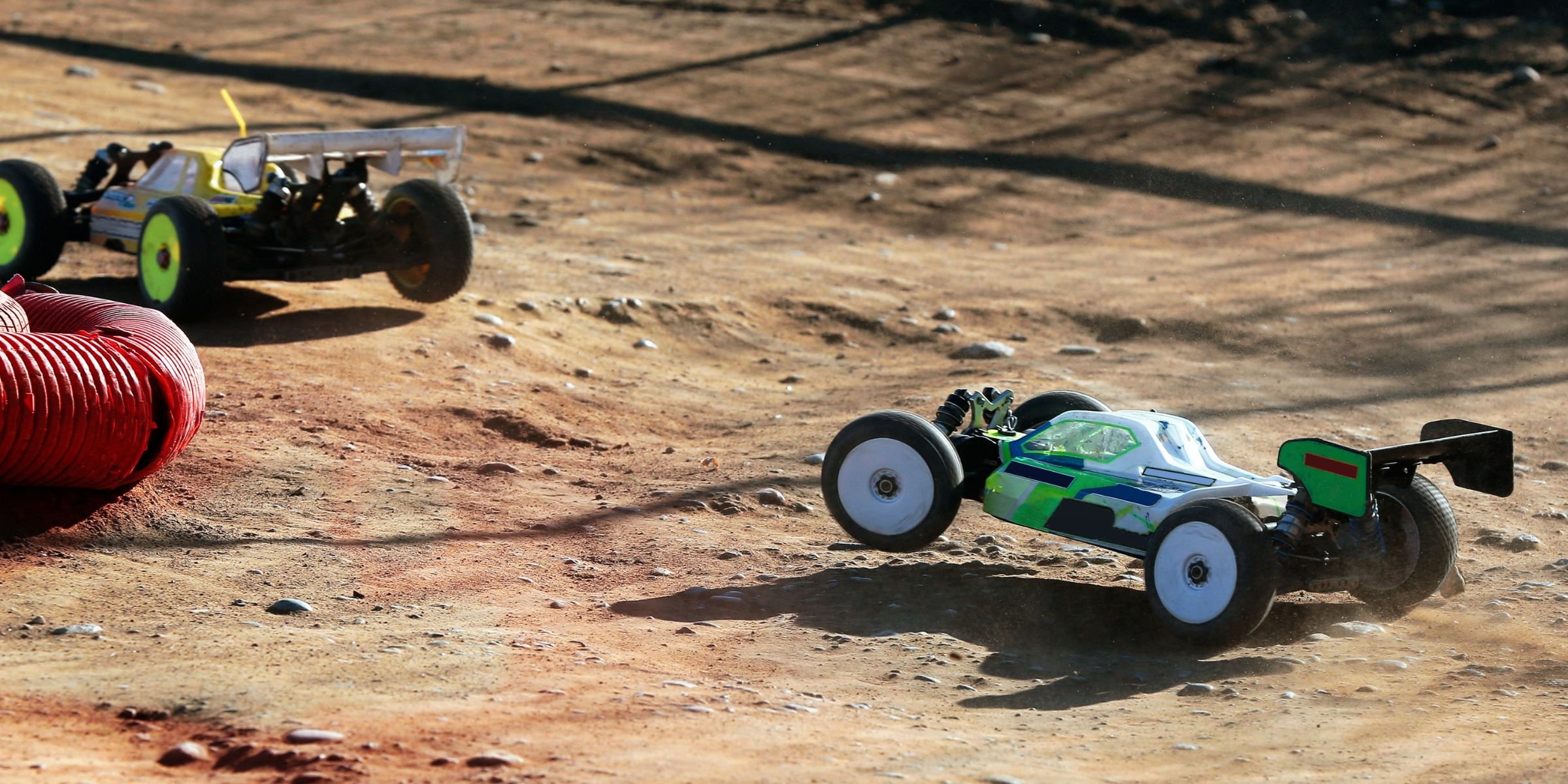
Silicone diff fluids in 14 weights. From 2,000 cSt for free-flowing front diffs to 100,000 cSt for locked-up rear traction. Pure silicone base, heat-stable, made in the UK.
Diff oil decides how power gets to the wheels. Too thin and the corner-exit traction goes away. Too thick and the chassis feels locked up, fighting the steering. The trick is the right viscosity for the layout — and getting the same behaviour the next time you fill the diff.
Rhodex covers the working range in 14 weights. Each batch is held to the same tight cSt tolerance, so when you make a change, you're actually changing the oil — not chasing batch variance.
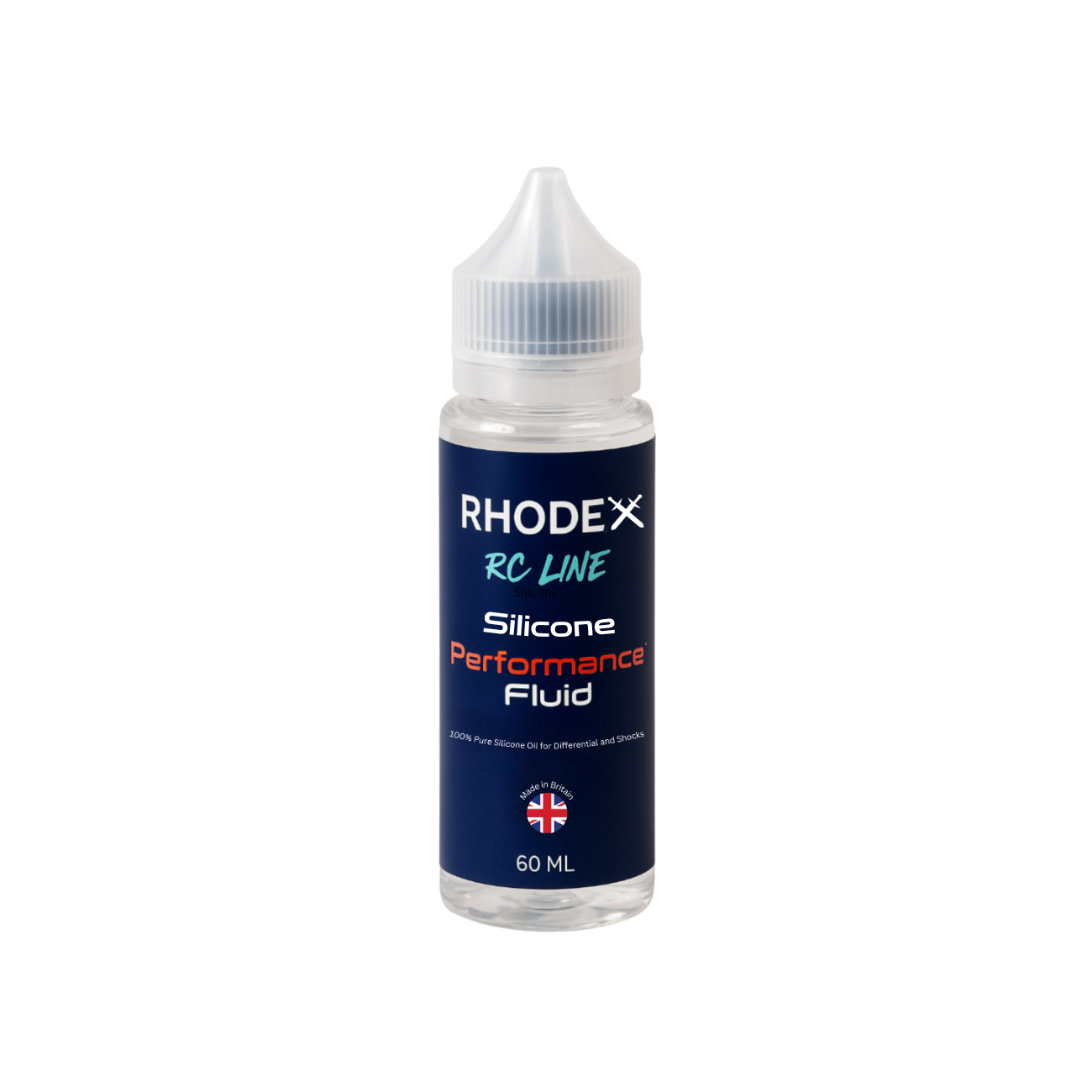
From free-flowing front diffs to ultra-thick rear setups — pick the cSt that suits your layout.
Free-flowing diff oil for front differentials in 1/10 touring cars and competition setups.
Light differential fluid for free-rotating front diffs and high-grip surface tuning.
Common viscosity for front diffs in touring cars. Smooth power transfer with predictable corner entry.
Bridging viscosity between light and medium. Versatile for center diffs and balanced setups.
Standard center differential viscosity. Reliable choice for balanced 4WD power distribution.
Mid-range center diff oil. Slight tightening for higher-grip surfaces and corner-exit power.
Higher-grip center diff viscosity. Used by competitive drivers seeking on-power stability.
Standard rear diff viscosity for off-road buggies. Strong corner-exit traction.
Tighter rear diff for power tracks. More mechanical traction, less unwanted wheel spin.
Heavy rear differential fluid. Locked-feeling traction for high-power buggies on grip-rich tracks.
Heavy traction control fluid. Near-locked feel for short-course trucks and high-power applications.
Very heavy diff oil. Specialist viscosity for extreme-traction setups and locked-axle simulation.
Maximum viscosity in the range. Ultra-thick fluid for spool-like behavior and extreme traction needs.
Rough starting points by diff position. Track surface, driving style and chassis all push these around — treat the "common choice" column as a first guess, not a prescription.
| Diff Position | Typical Range | Use Case | Common Choice |
|---|---|---|---|
| Front Diff (4WD) | 2,000 – 7,500 cSt | Free corner entry, light steering response | 5,000 cSt |
| Centre Diff (4WD) | 7,500 – 25,000 cSt | Front/rear power balance, on-power stability | 10,000 cSt |
| Rear Diff (4WD) | 10,000 – 30,000 cSt | Corner-exit traction, mechanical grip | 20,000 cSt |
| Single Diff (2WD) | 3,000 – 10,000 cSt | 2WD buggy traction tuning | 5,000 cSt |
| Locked-Like Setups | 50,000 – 100,000 cSt | Near-spool behaviour, maximum traction | 100,000 cSt |
Thicker oil locks the diff up more — more on-power traction, slower direction changes. Thinner oil lets the diff turn more freely — better corner entry, less power down. Pick whichever side of that tradeoff suits your track and driving style.